Your front door takes more abuse than any other element of your home's exterior - UV exposure, temperature swings, rain, humidity, and daily mechanical stress. Wood warps. Steel dents and rusts. Fiberglass does neither and it does it for 25–30 years with almost no maintenance.
That's why fiberglass has become the default upgrade choice for homeowners, contractors, and property managers across Texas, Florida, California, and the broader U.S. market. This guide covers what actually matters when buying a fiberglass door - performance specs, the right product for your application, and the mistakes that cost buyers more than the door itself.
Why Fiberglass Outperforms Every Other Entry Door Material
Fiberglass wins across almost every category that matters for long-term residential performance - especially in climates like Texas and Florida where heat, humidity, and UV exposure accelerate the degradation of wood and steel alternatives.
| Fiberglass | Wood | Steel | |
| Durability | Excellent | Moderate | Good |
| Weather Resistance | Excellent | Poor | Moderate |
| Maintenance | Very Low | High | Moderate |
| Energy Efficiency | Excellent | Good | Moderate |
| Security | Excellent | Good | Excellent |
| Design Range | Wide | Wide | Limited |
| Lifespan | 25–30 years | 10–20 years | 15–20 years |
What Makes a Fiberglass Door Actually Perform?
Not all fiberglass doors are built the same. These are the four specs that separate a quality door from one that looks good in photos and underperforms in the field:
1. Foam Core Density
The insulated foam core is what drives energy performance. Higher-density foam means better R-value, better soundproofing, and a more solid feel when the door closes. Always ask for the R-value before buying — quality residential doors start at R-5 and go higher.
2. Skin Thickness
Thicker fiberglass skins resist denting, hold stain and paint better over time, and provide more structural integrity against forced entry. Thin-skin doors are the ones that crack at the corners and fade unevenly in UV exposure.
3. Weatherstrip System
Compression weatherstripping — not brush seals — is what actually stops air and moisture infiltration at the perimeter. This is where cheap doors cut corners and where energy performance is lost after installation.
4. Hardware Reinforcement
The door is only as secure as its hardware backing. Look for reinforced strike plates, heavy-duty hinge plates, and a multi-point locking system on any door in a primary entry application.
Highline's Top Fiberglass Door Configurations
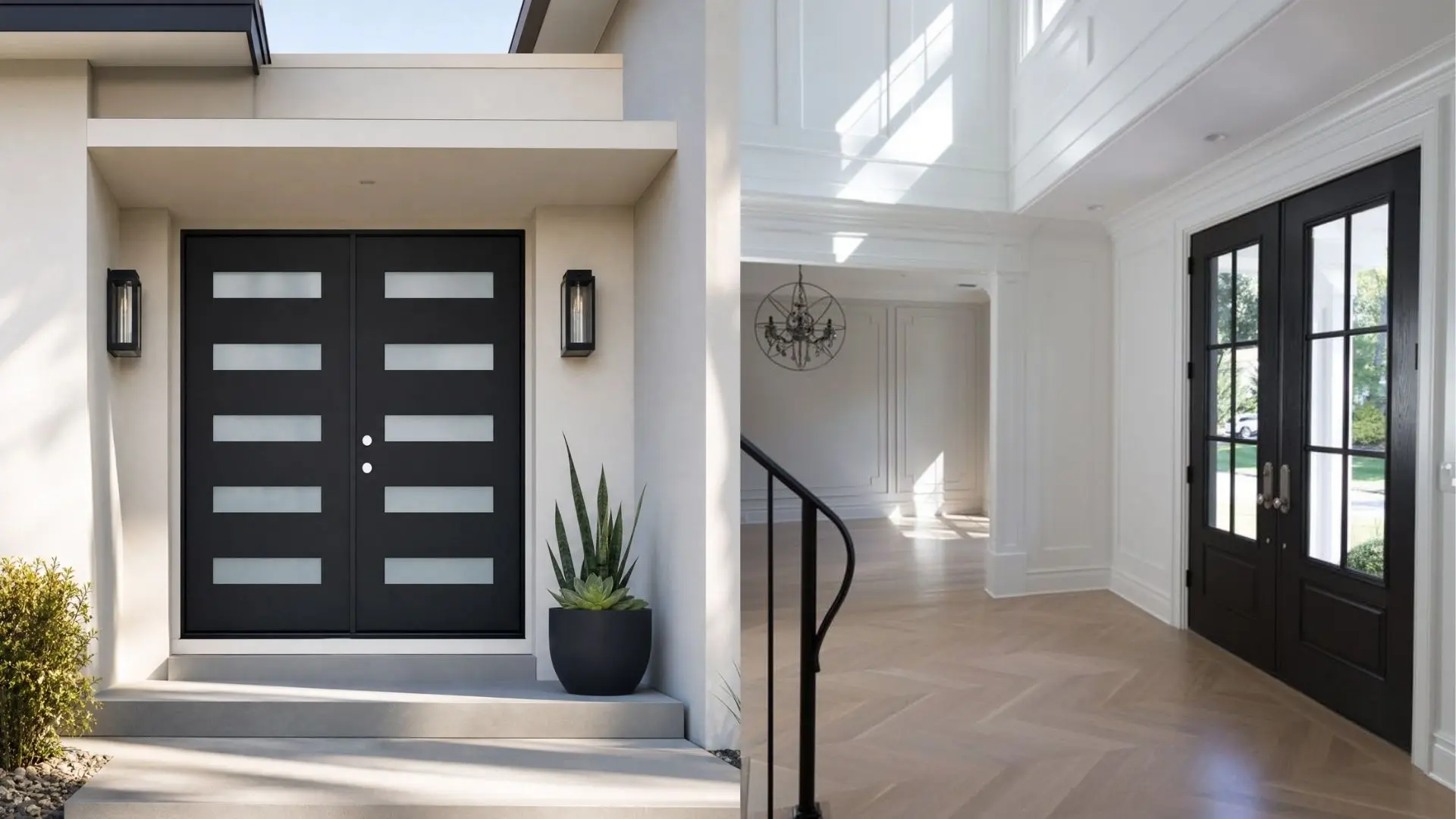
Modern 4-Lite Frosted Glass Prehung Black Exterior Door — 1033L | 3'0 × 8'0 | Left Hand | With 2 Sidelites
The clean-line choice for contemporary U.S. homes. Four frosted glass lites bring natural light into the entry foyer while maintaining full privacy — no silhouette visibility from outside. The black exterior finish and prehung system make this the most straightforward installation in Highline's fiberglass lineup.
Key specs: Frosted 4-lite glass, prehung with two sidelites, black exterior finish, 8-foot height.
Best for: Modern and transitional homes, luxury apartments, renovations where the entry door is a design focal point, any application where privacy and natural light need to coexist.
🔗 [Shop 1033L at Highline Building Supplies]
Exterior Fiberglass 6 Flush Glaze Black Painted — 1007LDBL | 3'0 × 8'0 | Left Hand
The durability-first option. Six flush glaze panels, reinforced fiberglass construction, and a UV-resistant black painted finish that holds up in direct sun exposure without fading or chalking. This is the door contractors specify for rental properties, high-traffic residential entries, and any application where performance matters more than decoration.
Key specs: 6-panel flush glaze design, black painted finish, left-hand swing, reinforced fiberglass construction.
Best for: Rental properties, investment builds, production housing, high-traffic entry points where low maintenance is a priority.
🔗 [Shop 1007LDBL at Highline Building Supplies]
Exterior Fiberglass 8 Flush Glaze 717# Stain — 1085RDBL | 3'0 × 8'0 | Right Hand | 72×96
The "wood look without the wood problems" option. Eight flush glaze panels with a factory-applied wood stain finish deliver genuine traditional aesthetics — the kind that reads as hardwood at the curb — while the fiberglass substrate underneath handles weather, humidity, and UV without warping or requiring refinishing every few years. At 8 feet tall, it suits premium residential entries where scale matters.
Key specs: 8-panel flush glaze, 717# stain finish, right-hand swing, 72×96 extra-tall configuration.
Best for: Luxury homes, estate-style entries, traditional and transitional architecture, clients who want wood aesthetics without wood maintenance.
🔗 [Shop 1085RDBL at Highline Building Supplies]
Cost vs. Long-Term Value
Fiberglass doors cost more upfront than hollow-core steel or basic wood — but the total cost of ownership tells a different story.
A quality wood door typically requires repainting or refinishing every 3–5 years, swells seasonally in humid climates, and often needs replacement within 15 years in high-UV environments. Factor in that maintenance cost and the gap closes quickly.
For rental properties and investment builds specifically, fiberglass is the financially sound choice — lower callback rates, no seasonal adjustment calls, and a finish that holds without landlord intervention.
4 Mistakes Buyers Make When Purchasing Fiberglass Doors
1. Ordering the wrong swing direction.
Left-hand vs. right-hand is one of the most common ordering errors — and it's determined by standing outside looking in, not from the inside looking out. The hinge side determines the hand. Confirm before ordering, not after delivery.
2. Choosing design over core performance.
A beautiful door with a thin foam core and cheap weatherstripping will underperform a plainer door with a high-density core and compression seals. Always ask for the R-value and weatherstrip spec — not just the finish options.
3. Ignoring slab thickness compatibility.
Fiberglass door slabs come in standard thicknesses — typically 1-3/4". If your existing frame was built for a different thickness, the hardware prep and frame fit won't align. Confirm frame compatibility before purchasing, especially on replacement projects.
4. Skipping weather rating certifications.
In Texas, Florida, and coastal markets, look for doors with documented wind load and water infiltration ratings. These certifications confirm the door has been tested against the conditions it will actually face — not just in a showroom environment.
FAQs
Q: Are fiberglass doors better than wood doors?
For most U.S. climates — yes. Fiberglass outperforms wood on weather resistance, maintenance requirements, and long-term energy performance. Wood remains the preference for stain-grade applications where natural grain is part of the design intent, but for painted entries or humid climates, fiberglass is the stronger choice.
Q: How long do fiberglass doors last?
Quality fiberglass doors last 25–30 years with minimal maintenance — significantly longer than wood (10–20 years) or steel (15–20 years) in high-UV or high-humidity environments.
Q: Do fiberglass doors improve energy efficiency?
Yes — the insulated foam core significantly reduces heat transfer compared to hollow steel or solid wood. In Texas and Florida, where cooling loads are high, this translates to a measurable reduction in HVAC demand.
Q: Can fiberglass doors look like real wood?
Modern stain-finish fiberglass doors are nearly indistinguishable from real wood at curb distance. The 1085RDBL with 717# stain is a good example — the grain texture and finish depth read as hardwood without any of the maintenance requirements.
Q: Are fiberglass doors secure?
Yes — reinforced fiberglass skins, high-density foam cores, and multi-point locking systems make modern fiberglass doors as secure as steel and significantly more secure than hollow-core wood.
Ready to Choose Your Fiberglass Door?
The right fiberglass door improves your home's security, energy performance, and curb appeal — and it does it for 25–30 years without demanding much in return. Whether you're upgrading a single entry on a renovation project or spacing doors across a multi-unit build, the key is matching the right configuration to your application.
Highline Building Supplies carries a full range of fiberglass exterior doors — modern frosted, flush glaze, and stain-finish configurations — for homeowners, contractors, and builders across Texas and the USA.