Walk into any building supply showroom in Texas and you'll hear the same debate: wood door or fiberglass? Both look great in photos. Both come in dozens of styles. And both have passionate advocates on every contractor crew and design forum in the country.
But the honest answer isn't about preference — it's about performance. Where the door faces, how your climate behaves, how much maintenance you're willing to do, and what the door actually needs to withstand over 20+ years. This guide gives you the real comparison so you can make the right call for your specific project.
Why This Decision Matters More Than Most Buyers Realize
Your entry door is the most mechanically stressed element on your home's exterior. It opens and closes thousands of times a year, faces direct UV exposure, absorbs rain and humidity, and is the first line of defense against forced entry. The material you choose determines how well it handles all of that — not just at year one, but at year ten and year twenty.
In Texas especially, where summer temperatures regularly exceed 100°F, UV exposure is extreme, and humidity swings are significant — material performance is not a secondary consideration. It's the primary one.
Wood Doors: Where They Excel and Where They Don't
Wood has been the entry door standard for centuries for good reason. The grain, the weight, the way it responds to stain — nothing fully replicates it. For stain-grade applications where natural wood character is part of the design intent, wood remains the material of choice.
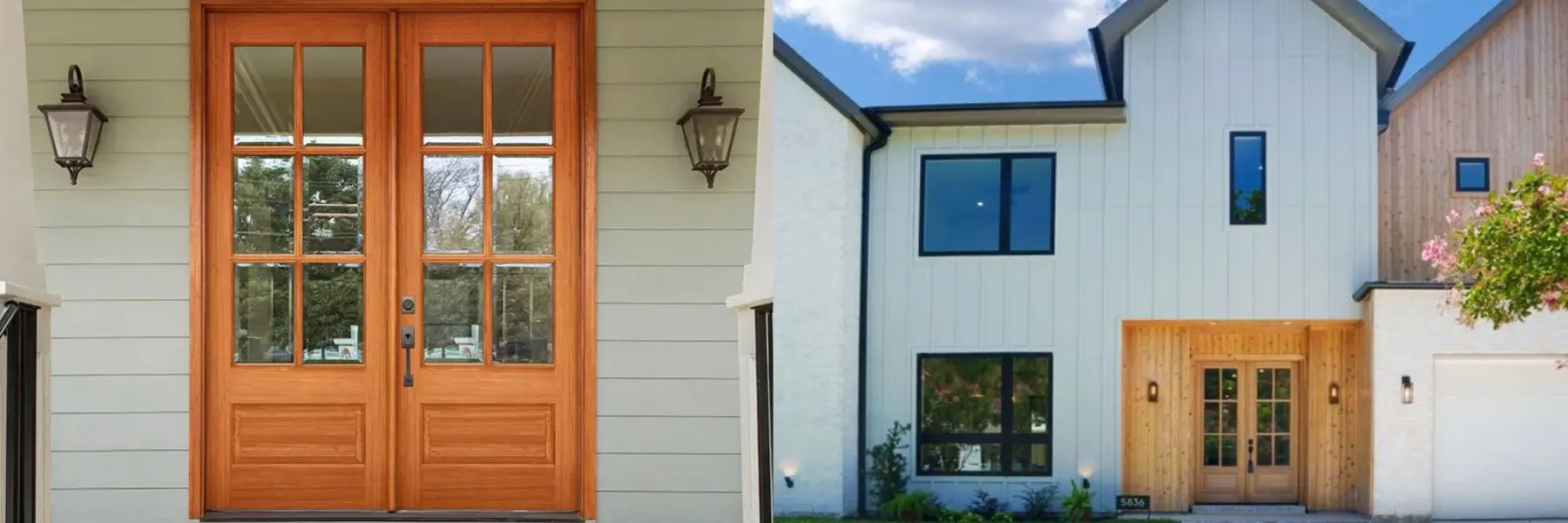
Where wood performs well:
- Stain-grade applications where real grain is non-negotiable
- Protected entries with deep overhangs that limit direct weather exposure
- Climates with moderate humidity and temperature swings
- Historic or traditional homes where authenticity matters to preservation standards
Where wood struggles:
- Direct sun exposure — UV degrades finish and dries out wood rapidly
- High humidity environments — wood absorbs moisture and swells seasonally
- Texas and Gulf Coast climates — heat and humidity accelerate all failure modes
- Rental and investment properties — maintenance requirements are too high for passive ownership
Maintenance reality: A wood door in a sun-exposed Texas entry needs refinishing or repainting every 2–4 years. Skip a cycle and the finish cracks, moisture infiltrates, and the door starts warping at the edges. That maintenance cost — in time and money — adds up significantly over a 20-year ownership period.
Fiberglass Doors: Why Contractors Default to Them
Fiberglass entered the residential door market as a maintenance-free alternative to wood — and it's become the dominant material in U.S. new construction and renovation for good reason. Modern fiberglass doors don't just avoid wood's problems. They actively outperform it across most performance categories.
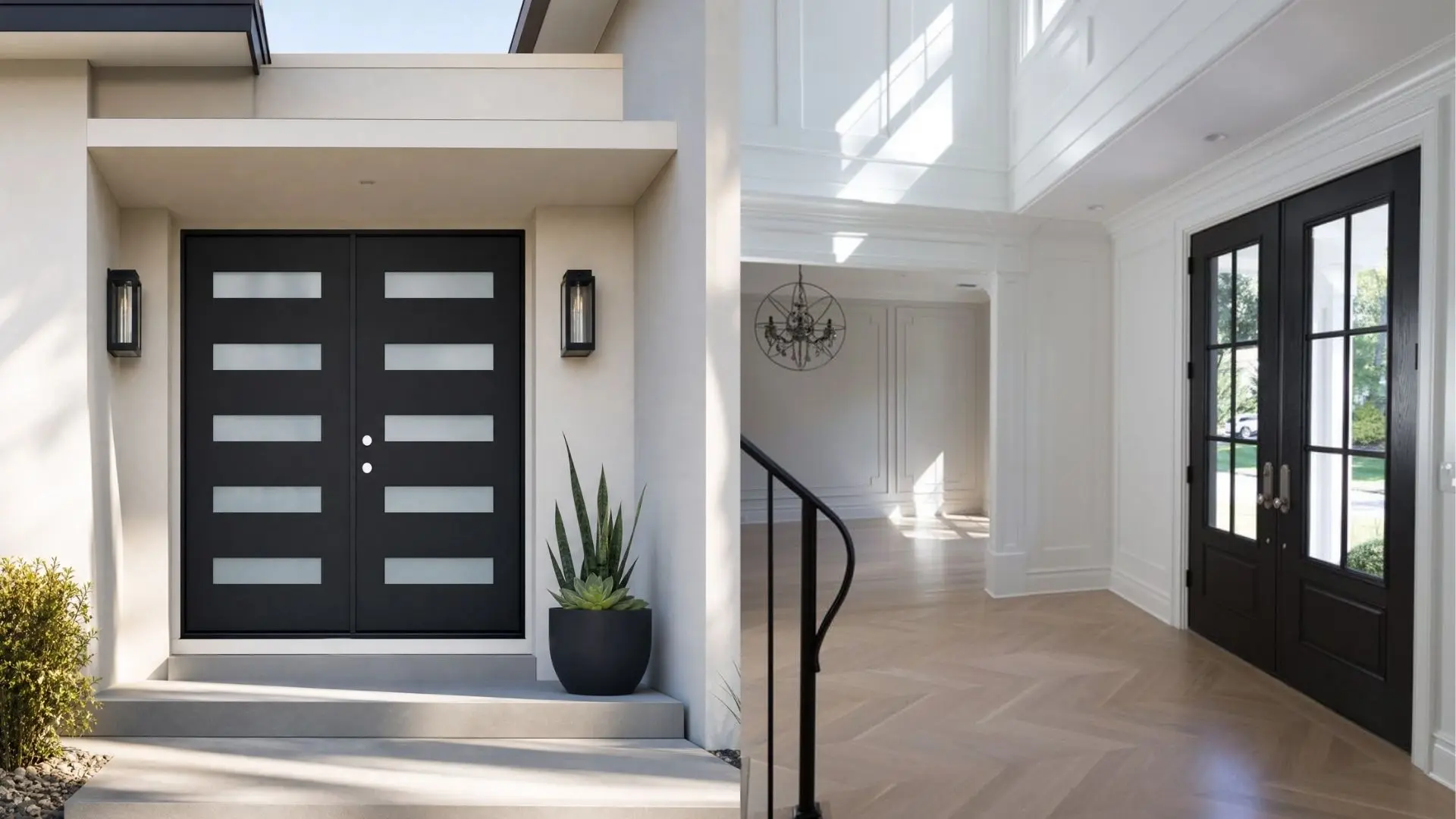
Where fiberglass excels:
- Weather resistance — UV-stable finishes don't fade, crack, or chalk
- Dimensional stability — doesn't swell, shrink, or warp with humidity changes
- Energy efficiency — insulated foam cores outperform solid wood on R-value
- Security — reinforced skins resist impact better than hollow-core wood
- Low maintenance — clean annually, inspect sealant, done
- Design range — modern stain-finish fiberglass is nearly indistinguishable from real wood at curb distance
The one area wood still wins: If you're standing close and running your hand across the surface, real wood grain has a tactile authenticity that even the best fiberglass skin doesn't fully replicate. For a client who cares deeply about that detail — and whose door has adequate weather protection — wood is still the right call.
For everyone else: fiberglass.
Head-to-Head Comparison
| Wood | Fiberglass | |
| Upfront Cost | Higher | Medium–High |
| Maintenance | High (2–4 yr refinish) | Very Low |
| Weather Resistance | Poor–Moderate | Excellent |
| Energy Efficiency | Good | Excellent |
| Security | Good | Excellent |
| Design Options | Wide | Wide |
| Lifespan (Texas climate) | 10–15 years | 25–30 years |
| Best For | Stain-grade, protected entries | Most U.S. residential applications |
Highline's Top Fiberglass Door Options
For most Texas homeowners and contractors, these are the configurations that deliver:
Modern 4-Lite Frosted Glass Prehung Black Exterior Door (1033L)
The contemporary choice — frosted glass panels, black frame, prehung with two sidelites. Maximum natural light, full privacy, clean modern aesthetic.
🔗 [Shop 1033L at Highline Building Supplies]
Exterior Fiberglass 6 Flush Glaze Black Painted (1007LDBL)
The durability-first option for rental properties and high-traffic entries. Reinforced construction, UV-resistant black finish, low maintenance for passive ownership.
🔗 [Shop 1007LDBL at Highline Building Supplies]
Exterior Fiberglass 8 Flush Glaze 717# Stain (1085RDBL)
The wood-look solution. Factory stain finish reads as real hardwood at curb distance — without any of the maintenance requirements that come with actual wood.
🔗 [Shop 1085RDBL at Highline Building Supplies]
What About Cost Over Time?
Fiberglass doors typically cost more upfront than comparable wood doors. But total cost of ownership tells a different story.
A wood door requiring refinishing every 3 years at $300–$500 per service adds $1,000–$1,500+ to the 10-year cost of ownership. A fiberglass door requiring nothing beyond an occasional wipe-down and annual sealant check costs almost nothing to maintain over the same period.
Over a 20-year window — which is a realistic lifespan comparison — fiberglass is almost always the more economical choice, particularly in high-UV, high-humidity markets like Texas.
4 Questions to Help You Decide?
1. Is the entry protected by an overhang?
Deep overhang = wood is viable. Direct weather exposure = fiberglass every time.
2. Is this a stain-grade or paint-grade application?
Stain-grade with real grain visibility = wood. Paint-grade or faux wood finish = fiberglass outperforms.
3. How hands-on is the owner?
Owner-occupied, detail-oriented homeowner = wood is manageable. Rental property or low-maintenance priority = fiberglass only.
4. What climate zone is the property in?
Texas, Florida, Gulf Coast, Southwest = fiberglass. Moderate climate with mild summers = wood is more viable.
FAQs
Q: Is fiberglass better than wood for entry doors?
For most U.S. climates — especially Texas and the South — yes. Fiberglass outperforms wood on weather resistance, energy efficiency, maintenance requirements, and long-term durability. Wood remains the preference for stain-grade applications with adequate weather protection.
Q: Do fiberglass doors look like real wood?
Modern stain-finish fiberglass doors closely replicate the appearance of real wood at curb distance. The 1085RDBL with 717# stain is a strong example — grain texture and finish depth read as hardwood without the maintenance requirements.
Q: How long does a fiberglass door last compared to wood?
In Texas conditions, quality fiberglass doors last 25–30 years with minimal maintenance. Wood doors in similar conditions typically require replacement or major restoration within 10–15 years without consistent upkeep.
Q: Which is more energy efficient — wood or fiberglass?
Fiberglass. The insulated foam core in a quality fiberglass door delivers a higher R-value than solid wood, reducing heat transfer and HVAC load — particularly relevant in Texas where cooling costs are high.
Q: Can you paint or stain a fiberglass door?
Yes — fiberglass doors accept both paint and stain finishes. Factory-applied finishes like the 717# stain offer the most consistent result, but field-applied finishes work well when applied correctly to a properly prepped surface.
The Bottom Line
For most homeowners, contractors, and builders in Texas and across the U.S. — fiberglass is the smarter long-term choice. Better weather resistance, lower maintenance, stronger energy performance, and a 25–30 year lifespan that wood in a harsh climate can't match.
Wood earns its place in stain-grade applications with good weather protection. Everything else — fiberglass wins.
Highline Building Supplies carries a full range of fiberglass exterior doors for homeowners, contractors, and builders across Texas and the USA.
🔗 Shop Fiberglass Doors → highlinesupplies.com/shop?attribute_value=238-955