The wrong interior door is one of those mistakes you live with every day - a hollow-core bedroom door that does nothing for noise, a swing door eating into a small room, a pantry door that makes the kitchen look unfinished. In apartments and rental units especially, door selection affects privacy, space, and how the whole interior feels.
This guide covers the four door types that actually deliver for apartment renovations in 2026, what each one does well, where it belongs, and how to spec them without overspending.
What Makes an Interior Door Work in an Apartment Setting?
Apartments have constraints that single-family homes don't — tighter floor plans, shared walls, noise between rooms, and renovation budgets that need to stretch across multiple spaces. The right door addresses all of these:
- Privacy — solid construction between bedrooms, bathrooms, and shared spaces
- Space efficiency — doors that don't steal floor area in compact layouts
- Noise control — core density matters more than most buyers realize
- Design consistency — doors should feel like part of the interior, not afterthoughts
- Durability — rental and multi-unit properties need doors that hold up to daily use without frequent replacement
The 4 Best Interior Door Types for Apartments:
1. Solid-Core Doors — Best for Bedrooms and Privacy
Solid-core doors have a dense engineered wood or composite interior — unlike hollow-core doors which are essentially empty inside. That density is what delivers genuine sound reduction between rooms, and it's immediately noticeable in shared apartments and multi-occupant units.
Where they belong: Bedrooms, home offices, primary bathrooms, any room where privacy matters.
What to expect: Better noise reduction, more substantial feel when closing, higher resistance to dents and warping over time. Slightly higher upfront cost than hollow-core, but significantly better performance and longer lifespan.
🔗 [Shop Solid-Core Doors at Highline Building Supplies]
2. Flush Doors — Best for Modern Interiors on a Budget
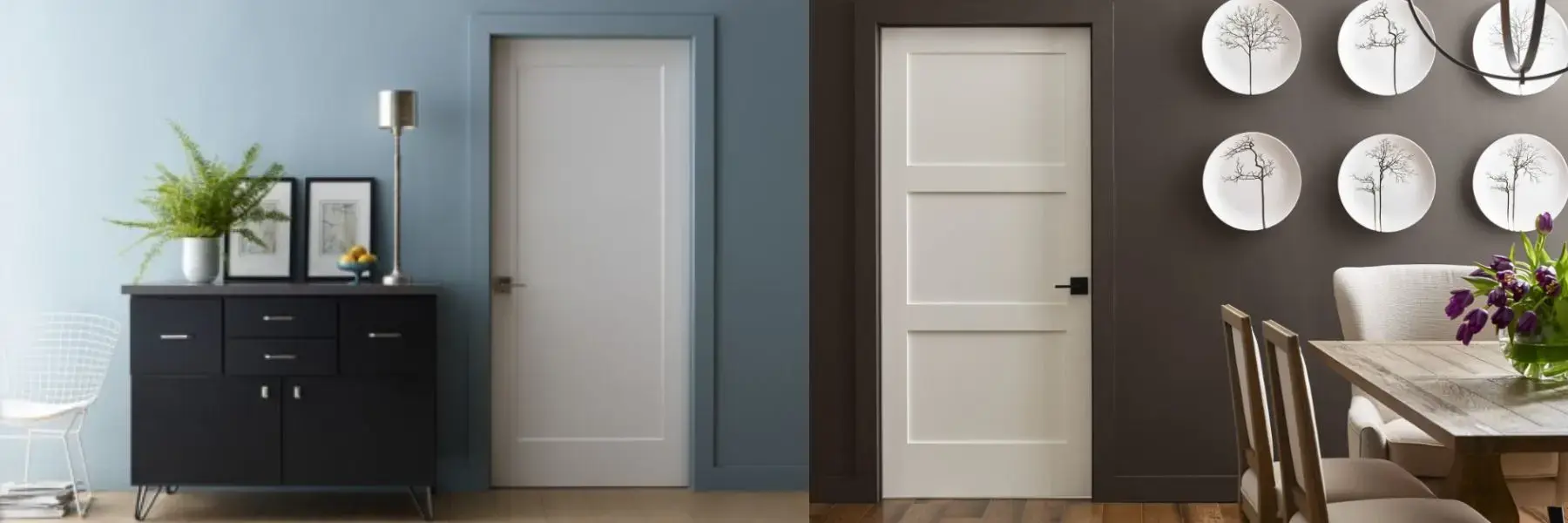
Flush doors have a completely flat, smooth face — no panels, no detailing. They're the clean-line choice for modern and contemporary apartments, and they're consistently one of the most affordable options in the market.
Where they belong: Secondary bedrooms, living room entries, utility rooms, any space where the design brief is minimal and the budget is tight.
What to expect: Easy to paint, easy to clean, compatible with virtually any interior style. Pair with quality hardware — the door is simple enough that the handle and hinges become the design detail.
3. Bifold Doors — Best for Closets and Compact Spaces
Bifold doors fold inward along a track rather than swinging open — which means they reclaim the floor area that a standard door would swing through. In small apartments, that difference is real and usable.
Where they belong: Laundry closets, walk-in closets, utility rooms, storage areas — anywhere a swing door creates an obstacle.
What to expect: Maximum space efficiency, easy installation, straightforward replacement when needed. Available in multiple finishes to match existing trim and cabinetry.
🔗 [Shop Bifold Doors at Highline Building Supplies]
4. Pantry Doors — Best for Kitchen Aesthetics
A pantry door is one of the highest-impact, lowest-cost upgrades in an apartment kitchen. It conceals storage, adds visual interest, and — when chosen correctly — makes the whole kitchen feel more designed.
Popular options: Frosted glass French doors, shaker-style panels, contemporary flush designs. The French 1-lite pantry door in hemlock is one of Highline's most requested configurations — it brings light into the pantry while keeping the look clean and modern.
Where they belong: Kitchen pantries, utility closets adjacent to kitchens, butler's pantry spaces.
🔗 [Shop Pantry Doors at Highline Building Supplies]
Quick Comparison: Which Door Type Is Right for Each Room?
| Door Type | Cost | Noise Reduction | Best Room |
| Solid-Core | Medium | Excellent | Bedrooms, offices |
| Flush | Low–Medium | Good | Secondary rooms |
| Bifold | Low–Medium | Moderate | Closets, storage |
| Glass Pantry | Medium | Moderate | Kitchens, pantries |
How to Spec Interior Doors Across a Full Apartment
If you're renovating a full unit or managing a multi-unit property, here's the most cost-effective approach:
- Bedrooms → Solid-core doors. Privacy and noise control are non-negotiable here.
- Secondary rooms → Flush doors. Clean look, lowest cost, easy to maintain.
- Closets and storage → Bifold doors. Reclaim the swing radius, maximize usable space.
- Kitchen pantry → Upgrade the door. It's the highest-visibility upgrade per dollar in the kitchen.
- Hardware → Don't cheap out. The handle and hinges are what people touch every day — quality hardware extends door life and improves the feel of the whole space.
4 Mistakes That Cost Apartment Buyers More Than the Doors
1. Choosing hollow-core for bedrooms.
Hollow-core doors cost less upfront but deliver almost no sound insulation. In shared apartments, this is the most common source of noise complaints — and the most avoidable.
2. Not measuring the rough opening before ordering.
Standard door sizes don't always match older apartment frames. Measure height, width, and confirm the swing direction before purchasing. A return is more expensive than a tape measure.
3. Matching on price instead of function.
The right door for a bedroom and the right door for a closet are different products at different price points. Match the spec to the room's actual demands — not a single budget line across the whole unit.
4. Ignoring hardware quality.
A quality door with cheap hinges and a flimsy handle feels cheap. Budget for hardware alongside the door — it's the part residents interact with hundreds of times a day.
FAQs
Q: What is the best interior door for an apartment bedroom?
Solid-core. The noise reduction and privacy difference compared to hollow-core is significant — especially in shared apartments or units with thin walls.
Q: Are bifold doors worth it for small apartments?
Yes — particularly for closets and laundry rooms. They eliminate the swing radius of a standard door, which in a small room can free up meaningful usable space.
Q: What's the most affordable interior door for a full apartment renovation?
Flush hollow-core doors are the lowest cost per unit. For full renovations, spec solid-core in bedrooms and flush hollow-core everywhere else — this balances performance and budget across the whole project.
Q: Is upgrading a pantry door worth it?
Consistently yes. It's one of the lowest-cost, highest-visibility upgrades in a kitchen renovation — and modern pantry door styles photograph well for listings and rental marketing.
Q: How do I choose between a solid-core and hollow-core door?
Ask one question: does this room need privacy or noise reduction? If yes — solid-core. If it's a utility room, storage space, or low-traffic area — hollow-core is fine and saves budget for where it matters.
Ready to Spec Your Apartment Doors?
Interior doors are one of those decisions that quietly affect how a space feels every single day — for residents, tenants, and buyers walking through for the first time. Getting the spec right across a full apartment or multi-unit property doesn't require a large budget. It requires matching the right door to the right room.
Highline Building Supplies carries solid-core, bifold, flush, and pantry door options for homeowners, property managers, and contractors across the USA — with the product range and technical guidance to help you get it right the first time.
🔗 Shop Interior Doors → highlinesupplies.com/shop/category/doors-interior-doors-72